
Understanding cymbal materials is essential for any drummer seeking to make informed purchasing decisions and achieve their desired sound. The composition of a cymbal directly influences its tonal characteristics, durability, and overall performance capabilities. From the bright crash of a rock performance to the subtle whisper of jazz brushwork, cymbal materials determine how these versatile instruments respond to different playing techniques and musical contexts.
Modern cymbal manufacturing represents centuries of metallurgical evolution, combining traditional craftsmanship with contemporary precision engineering. The choice of base metals, alloy proportions, and manufacturing processes creates distinct sonic personalities that define different cymbal series and brands. Professional drummers often build their entire sound around specific material characteristics, making material knowledge crucial for serious musicians.
Quality cymbal manufacturers invest heavily in understanding and perfecting cymbal materials throughout their production history. The best approaches combine time-tested bronze formulations with innovative manufacturing techniques, ensuring consistent quality across extensive product ranges. By carefully controlling alloy compositions and refining production processes, manufacturers deliver cymbals that meet the demanding requirements of professional and amateur drummers worldwide.
This comprehensive guide explores every aspect of cymbal materials, from basic metal compositions to advanced manufacturing techniques. Whether you’re purchasing your first cymbal set or expanding a professional collection, understanding these material fundamentals will help you make confident decisions and achieve optimal musical results.
The Primary Metals Used in Cymbal Manufacturing
Bronze dominates professional cymbal manufacturing due to its exceptional acoustic properties and workability characteristics. This copper-tin alloy provides the complex harmonic content and sustain that define quality cymbals. Bronze’s crystalline structure allows for controlled vibration patterns that create rich overtones and musical resonance. The metal’s durability ensures consistent performance under demanding playing conditions while maintaining tonal integrity over extended periods.
Brass cymbals serve entry-level and budget-conscious markets, offering acceptable sound quality at reduced costs. Composed primarily of copper and zinc, brass produces brighter, more focused tones with less complex harmonic content than bronze. While brass cymbals lack the sophisticated overtone structure of bronze instruments, they provide reliable performance for beginning drummers and practice applications. Some manufacturers use brass for specific tonal effects in professional lines.
Steel cymbals represent the most economical option, typically found in beginner drum sets and educational instruments. Steel construction produces harsh, cutting tones with limited sustain and minimal harmonic complexity. However, steel’s durability makes it suitable for heavy practice use where cost considerations outweigh sonic refinement. Some specialty applications utilize steel for specific sound effects or extreme volume requirements.
Nickel silver, despite its name containing no actual silver, appears in some cymbal construction as an alloy component or surface treatment. This copper-nickel-zinc combination offers corrosion resistance and specific tonal characteristics. While not common as a primary cymbal material, nickel silver serves specialized applications in hybrid constructions and experimental designs.
The most reputable manufacturers focus primarily on bronze alloys for their professional series, recognizing bronze’s superior acoustic properties and market acceptance. Material selection processes emphasize consistency, tonal quality, and manufacturing reliability. By specializing in proven bronze formulations, quality manufacturers ensure predictable results and professional-grade performance across their entire product ranges.
Understanding Bronze Alloy Compositions
B20 bronze, containing 80% copper and 20% tin, represents the premium standard for professional cymbals worldwide. This alloy composition provides optimal balance between workability and acoustic performance. The high tin content creates complex crystalline structures that generate rich, musical overtones and extended sustain. B20 bronze responds dynamically to playing intensity, offering subtle nuances at low volumes and powerful projection when played aggressively.
The 20% tin content in B20 bronze contributes significantly to its acoustic superiority over lower-tin alloys. Tin atoms within the copper matrix create acoustic impedance variations that generate complex harmonic interactions. This results in the characteristic “warmth” and musical complexity that professional drummers value. Additionally, B20 bronze’s workability allows for precise hammering and lathing that further enhances tonal characteristics.
B8 bronze, with 92% copper and 8% tin content, offers different tonal characteristics suited to specific musical applications. The lower tin percentage produces brighter, more focused sounds with enhanced projection and clarity. B8 bronze cymbals cut through dense musical arrangements effectively, making them popular for rock, metal, and high-volume applications. The reduced tin content also makes B8 bronze more economical to produce while maintaining professional quality standards.
B12 and B15 bronze formulations occupy the middle ground between B8 and B20 characteristics. B12 bronze (88% copper, 12% tin) provides moderate warmth with good projection, while B15 bronze (85% copper, 15% tin) approaches B20’s complexity while retaining some of B8’s brightness. These intermediate alloys allow manufacturers to target specific tonal requirements and price points within their product lines.
Leading manufacturers employ proprietary bronze formulations developed through extensive research and testing. These alloy compositions optimize the balance between musical performance, manufacturing consistency, and cost effectiveness. By carefully controlling tin percentages and trace element additions, manufacturers achieve consistent tonal characteristics across production runs while maintaining competitive pricing for professional-quality instruments.
The Cymbal Manufacturing Process
Cymbal production begins with precise alloy preparation and melting processes that determine final instrument quality. Raw copper and tin are melted together in controlled environments, ensuring complete homogenization and proper alloy formation. Temperature control during melting prevents oxidation and ensures consistent metal properties throughout the batch. Quality manufacturers monitor alloy composition continuously during melting to maintain strict specifications.
The molten bronze is cast into ingots or directly rolled into sheets, depending on the manufacturing approach. Rolling processes gradually reduce metal thickness while work-hardening the material to achieve proper mechanical properties. Multiple rolling passes with intermediate annealing steps prevent cracking and ensure uniform thickness distribution. The rolling direction and reduction ratios significantly influence the final cymbal’s grain structure and acoustic properties.
Heat treatment processes follow initial shaping, involving carefully controlled heating and cooling cycles that optimize metal properties. Annealing temperatures and cooling rates determine the bronze’s crystalline structure, directly affecting sound characteristics and workability. These thermal processes require precise control to achieve consistent results across production batches. Professional manufacturers maintain strict heat treatment protocols to ensure optimal balance between workability and acoustic performance.
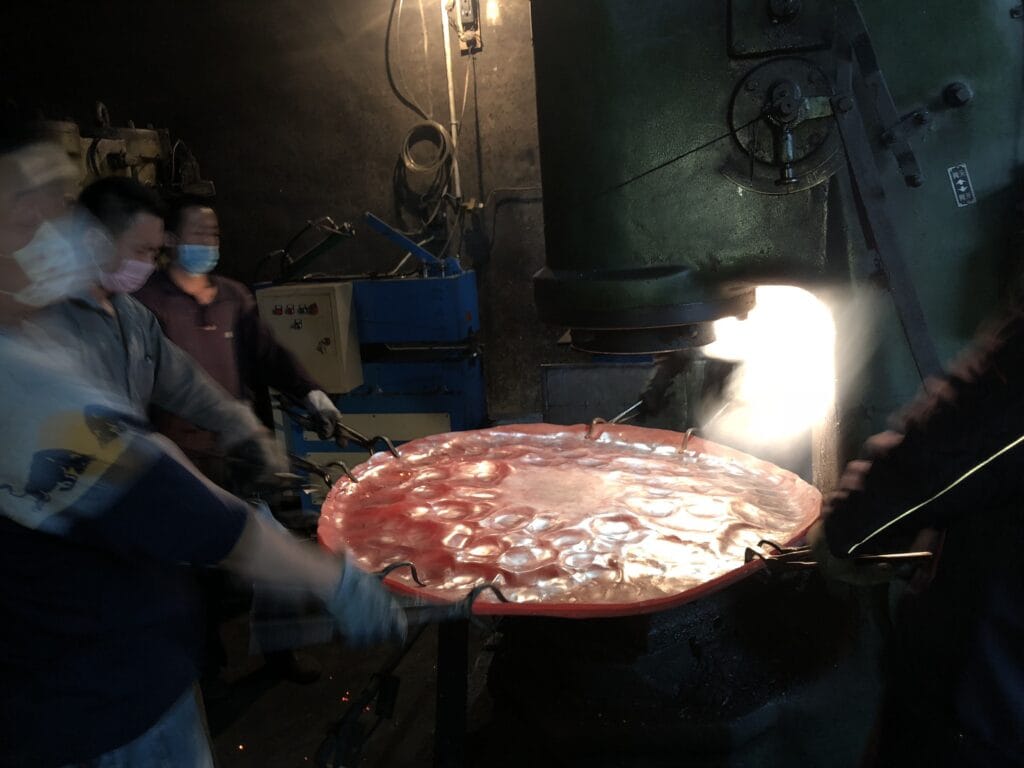
Hammering operations create the cymbal’s basic shape and begin developing its acoustic character. Traditional hand-hammering imparts irregular patterns that contribute to complex overtone generation, while machine hammering provides consistency and efficiency. The hammering pattern, depth, and distribution significantly influence tone, volume, and sustain characteristics. Skilled craftsmen adjust hammering parameters based on intended musical applications and tonal goals.
Lathing operations remove material in precise patterns to fine-tune acoustic properties and create visual appeal. Lathe cuts break up continuous vibration patterns, reducing sustain and modifying overtone content. The spacing, depth, and pattern of lathe cuts allow manufacturers to customize tonal characteristics for specific musical applications. Final polishing and quality inspection complete the manufacturing process before packaging and distribution.
Hand-Hammered vs Machine-Made Construction
Hand-hammered cymbal construction represents the traditional approach to cymbal making, requiring skilled craftsmen who understand the relationship between hammer placement and acoustic results. Each hammer blow creates unique stress patterns in the metal that contribute to complex harmonic generation. The irregular spacing and varying intensity of hand hammer marks produce asymmetrical vibration patterns that many musicians prefer for their organic, musical quality.
The hand-hammering process allows for individual customization and adjustment during manufacture. Experienced craftsmen can modify their technique based on how each cymbal develops during hammering, creating instruments with distinct personalities. This approach produces slight variations between cymbals that many professional drummers value for their uniqueness and character. However, hand-hammering requires significant skill development and results in higher production costs.
Machine-made cymbals offer consistency and cost-effectiveness that benefits both manufacturers and consumers. Automated hammering systems can replicate precise patterns with minimal variation between instruments. This consistency ensures predictable performance characteristics and allows musicians to replace cymbals with confidence in matching tonal qualities. Machine production also enables higher volume manufacturing that supports competitive pricing.
Modern manufacturing often combines hand and machine techniques to optimize both quality and efficiency. Initial shaping and rough hammering may be performed by machines, while final tonal adjustments are completed by skilled craftsmen. This hybrid approach provides consistency while preserving the human touch that contributes to musical character. The balance between automation and handcraft varies among manufacturers based on their quality standards and market positioning.
Quality manufacturers employ sophisticated combinations of traditional and modern techniques throughout their production processes. Skilled craftsmen work with precision machinery to achieve optimal balance between consistency and character. This approach ensures reliable quality while maintaining the musical nuances that distinguish professional-grade instruments from mass-produced alternatives.
Surface Treatments and Finishes
Traditional finish cymbals maintain their natural bronze appearance after manufacturing, displaying the warm golden color characteristic of bronze alloys. This finish preserves the metal’s natural acoustic properties without additional processing that might affect sound quality. Traditional finishes develop natural patina over time, creating visual character that many drummers appreciate. The unaltered surface also provides optimal stick response and authentic feel during performance.
Brilliant finish cymbals undergo polishing processes that create reflective, mirror-like surfaces with enhanced visual appeal. The polishing process removes surface irregularities and work-hardening effects from manufacturing, potentially altering acoustic characteristics. While brilliant finishes offer striking appearance suitable for stage performances, some musicians prefer traditional finishes for their perceived tonal authenticity and aging characteristics.
Raw and unlathed cymbal surfaces preserve the hammering marks and rough texture from initial forming processes. These surfaces provide unique acoustic properties with enhanced stick articulation and reduced overtone complexity. Raw cymbals often appeal to musicians seeking dry, controlled sounds with minimal sustain. The unprocessed surface also allows for custom lathing or modification by specialized craftsmen.
Patina treatments artificially age cymbal surfaces to create vintage appearance and modified acoustic properties. Chemical treatments can darken bronze surfaces and alter surface texture in ways that affect both visual appeal and sound characteristics. Some manufacturers offer patina options to recreate the look and feel of aged vintage cymbals while maintaining modern manufacturing quality and consistency.
Surface oxidation and protective coatings serve both aesthetic and functional purposes in cymbal manufacture. Controlled oxidation can enhance certain frequency responses while providing visual character. Protective coatings may prevent unwanted corrosion during storage and transportation. Quality manufacturers carefully balance surface treatments to achieve desired visual and acoustic results without compromising long-term performance or durability.
Specialty Cymbal Materials and Innovations
Hybrid metal combinations represent emerging trends in cymbal innovation, combining different alloys within single instruments to achieve unique tonal characteristics. Bi-metal construction might feature bronze bells with brass outer sections, or layered construction with different alloys at various thicknesses. These approaches allow manufacturers to combine the best characteristics of different materials while creating entirely new sound possibilities.
Coating technologies offer additional options for customizing cymbal characteristics without changing base metal composition. Specialized surface treatments can modify attack characteristics, reduce volume, or create specific tonal effects. Some coatings provide visual enhancement while preserving acoustic integrity. These innovations expand the sonic palette available to modern drummers while maintaining traditional construction quality.
Environmental considerations increasingly influence material selection and manufacturing processes in modern cymbal production. Recycled metals, reduced-impact manufacturing processes, and sustainable sourcing practices address environmental concerns while maintaining quality standards. Some manufacturers explore alternative alloys or production methods that reduce environmental impact without compromising musical performance.
Computer modeling and acoustic analysis contribute to material optimization and new alloy development. Advanced testing equipment allows manufacturers to analyze vibration patterns, frequency responses, and harmonic content with unprecedented precision. This data guides material selection and manufacturing parameter optimization, leading to improved consistency and targeted tonal characteristics.
Leading cymbal manufacturers invest in research and development to explore new materials and manufacturing innovations while preserving traditional quality standards. Modern approaches balance innovation with proven techniques, ensuring that new developments enhance rather than compromise musical performance. This commitment to advancement while respecting tradition drives continued evolution in the competitive cymbal market.
How Material Affects Sound Characteristics
Frequency response characteristics directly relate to cymbal material composition and manufacturing processes. Bronze alloys with higher tin content generally produce more complex harmonic structures with enhanced low-frequency content. The crystalline structure of different alloys creates specific resonant frequencies that contribute to each cymbal’s unique voice. Understanding these relationships helps drummers select cymbals that complement their musical requirements and playing styles.
Attack characteristics depend heavily on material hardness and surface properties resulting from alloy composition and heat treatment. Harder alloys typically produce sharper, more defined attacks with immediate response to stick contact. Softer materials may provide more gradual attack development with enhanced touch sensitivity. The balance between immediate response and musical development varies with material selection and manufacturing approaches.
Sustain properties reflect the material’s ability to maintain vibration over extended periods without significant amplitude decay. Higher tin content bronze alloys generally provide longer sustain with more complex overtone development. The crystalline structure and internal stress patterns created during manufacturing significantly influence how energy propagates through the cymbal and dissipates over time.
Volume projection capabilities depend on material density, thickness distribution, and acoustic efficiency of the alloy composition. Denser materials with optimized thickness profiles can project sound more effectively over distance and through dense musical arrangements. The relationship between material properties and projection characteristics influences cymbal selection for different venue sizes and musical contexts.
Musical style considerations require matching material characteristics to specific performance requirements. Jazz applications often benefit from complex, warm bronze alloys that respond sensitively to brush work and provide musical sustain. Rock and metal styles may require brighter, more cutting materials that penetrate high-volume mixes effectively. Understanding these material relationships helps drummers build effective cymbal collections for their musical needs.
Quality Indicators and Material Assessment
Visual inspection provides immediate indicators of material quality and manufacturing consistency. High-quality bronze exhibits uniform color and grain structure without obvious flaws or inclusions. Surface finish should be consistent with the intended design, whether traditional, brilliant, or specialty treatment. Hammer marks, lathe cuts, and other manufacturing features should display precision and intentional placement rather than random or careless execution.
Sound quality assessment requires evaluating multiple acoustic parameters including attack clarity, sustain characteristics, and harmonic complexity. Quality cymbals produce clear, musical tones across their full dynamic range without harsh frequencies or unwanted noise. The relationship between soft and loud playing should demonstrate musical development rather than simple volume increase. Overtone content should enhance rather than compete with fundamental frequencies.
Physical examination should include checking for proper weight distribution, balanced feel, and appropriate flexibility for the intended application. Quality cymbals exhibit consistent thickness profiles that support their intended acoustic characteristics. Edge condition should be smooth and properly finished to prevent cracking and ensure optimal acoustic coupling with air. Any irregularities should appear intentional rather than resulting from manufacturing defects.
Manufacturing consistency becomes apparent when comparing multiple cymbals from the same series or production run. Professional-grade cymbals should exhibit minimal variation in weight, dimensions, and acoustic characteristics. This consistency allows drummers to build matched sets and replace individual cymbals with confidence in tonal compatibility.
Quality manufacturers implement comprehensive quality control procedures throughout their manufacturing processes to ensure consistent material quality and acoustic performance. Testing protocols evaluate both individual cymbal characteristics and batch consistency to maintain professional standards. This commitment to quality assurance provides customers with confidence in their cymbal investments and long-term performance reliability.
Conclusion
Understanding cymbal materials empowers drummers to make informed decisions that align with their musical goals and performance requirements. The relationship between alloy composition, manufacturing processes, and acoustic characteristics directly influences every aspect of cymbal performance. From the bronze formulation to the final surface treatment, each material choice contributes to the instrument’s unique voice and musical capabilities.
Quality manufacturers’ expertise in material selection and manufacturing excellence positions them as trusted choices for discriminating drummers worldwide. Their commitment to quality bronze alloys, refined manufacturing processes, and comprehensive quality control ensures consistent performance and musical satisfaction. Whether building a first drum kit or expanding a professional setup, understanding material fundamentals supports optimal musical expression.
The investment in quality cymbal materials pays dividends through enhanced musical performance, extended instrument life, and continued playing satisfaction. Understanding these material fundamentals enables confident cymbal selection and appreciation for the craftsmanship behind these essential musical instruments.